Seasonal Shifts in Blackjack Tournament Participation Linked to Mobile App Cycles
Morgan Hayes · Aug 19, 2026
Seasonal Shifts in Blackjack Tournament Participation Linked to Mobile App Cycles
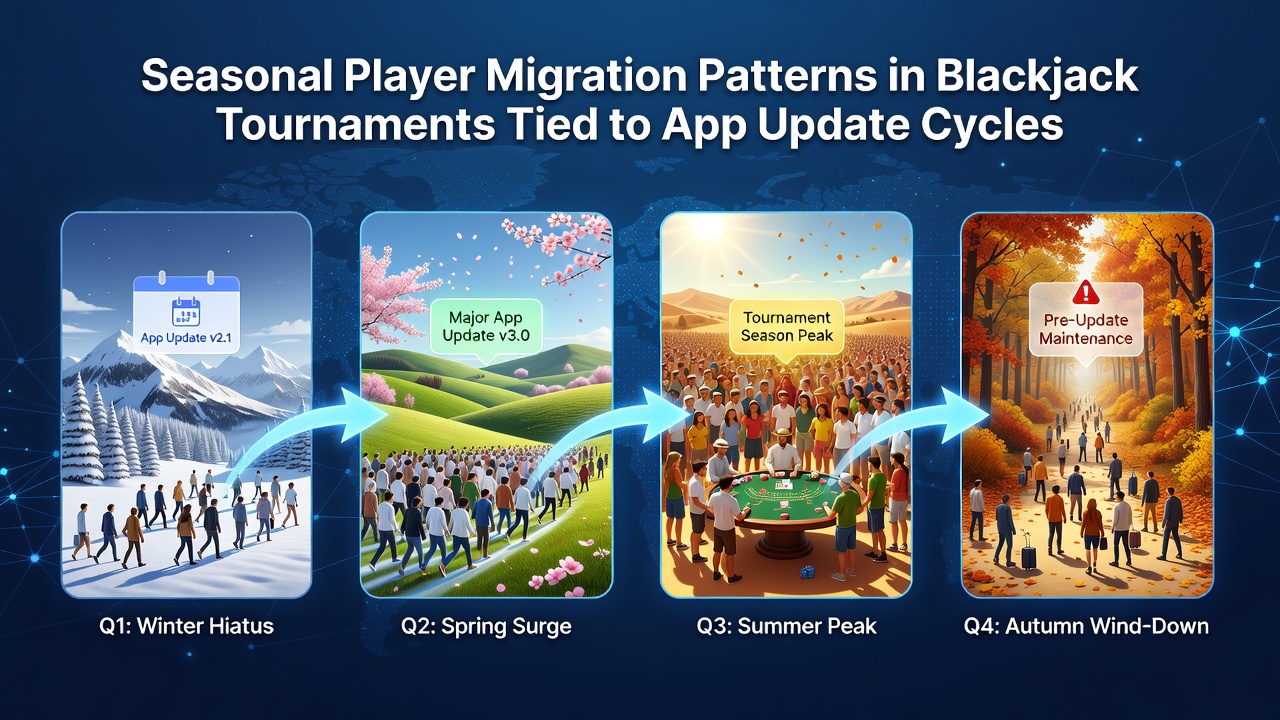
Data from multiple gaming platforms shows that player numbers in blackjack tournaments often rise and fall in alignment with scheduled mobile app updates, creating measurable migration patterns across different times of the year. These movements become especially clear when developers release major patches that introduce new features, fix bugs, or adjust tournament structures, prompting users to switch between applications in search of preferred formats and prize pools. Observers note that such cycles repeat annually, with spikes in activity occurring shortly after updates launch in spring and fall, while quieter periods emerge during summer and winter months when fewer revisions take place.
App Update Timing and Player Movement Data
Records compiled by industry analysts indicate that app developers typically schedule their largest updates between March and May as well as September and November, periods when download rates climb sharply and tournament entries increase by measurable percentages. During these windows, players frequently migrate from one platform to another to test revised rules or claim new bonus structures that appear alongside the updates. In contrast, the months of June through August and December through February often see fewer revisions, resulting in steadier but lower participation numbers as users remain on familiar applications. Figures released by the Nevada Gaming Control Board confirm that mobile blackjack tournament traffic in the state follows these broader seasonal rhythms, with documented increases tied directly to app release calendars rather than external events alone.
Regional Variations in Migration Behavior
Players in North American markets tend to shift toward apps that add multi-table options or faster deal speeds during update cycles, whereas participants in European and Asian regions show stronger movement when new variant modes or leaderboard changes appear. A report issued by the Malta Gaming Authority documented similar patterns across its licensed operators, noting that update announcements in late summer often trigger cross-app movement as users seek refreshed tournament schedules before the start of the fall season. These regional differences highlight how local preferences interact with global app development timelines, producing distinct flows that operators track through user analytics. Data from the same authority further reveals that August 2026 saw a noticeable uptick in tournament entries on platforms that pushed mid-cycle patches, aligning with patterns observed in prior years.
Effects on Tournament Structures and Prize Distribution
When large numbers of players migrate following an update, tournament organizers frequently adjust entry fees, blind structures, and prize allocations to accommodate the influx. Research from the International Gaming Institute at the University of Nevada, Las Vegas demonstrates that platforms experiencing sudden growth in participation after spring updates tend to expand their daily tournament offerings, while those seeing declines reduce frequency to maintain balanced player pools. The resulting changes create a feedback loop where migration influences structure, which in turn affects future player decisions about which app to use. Operators have responded by monitoring update schedules from competing developers, allowing them to time their own revisions for maximum retention during peak migration windows.
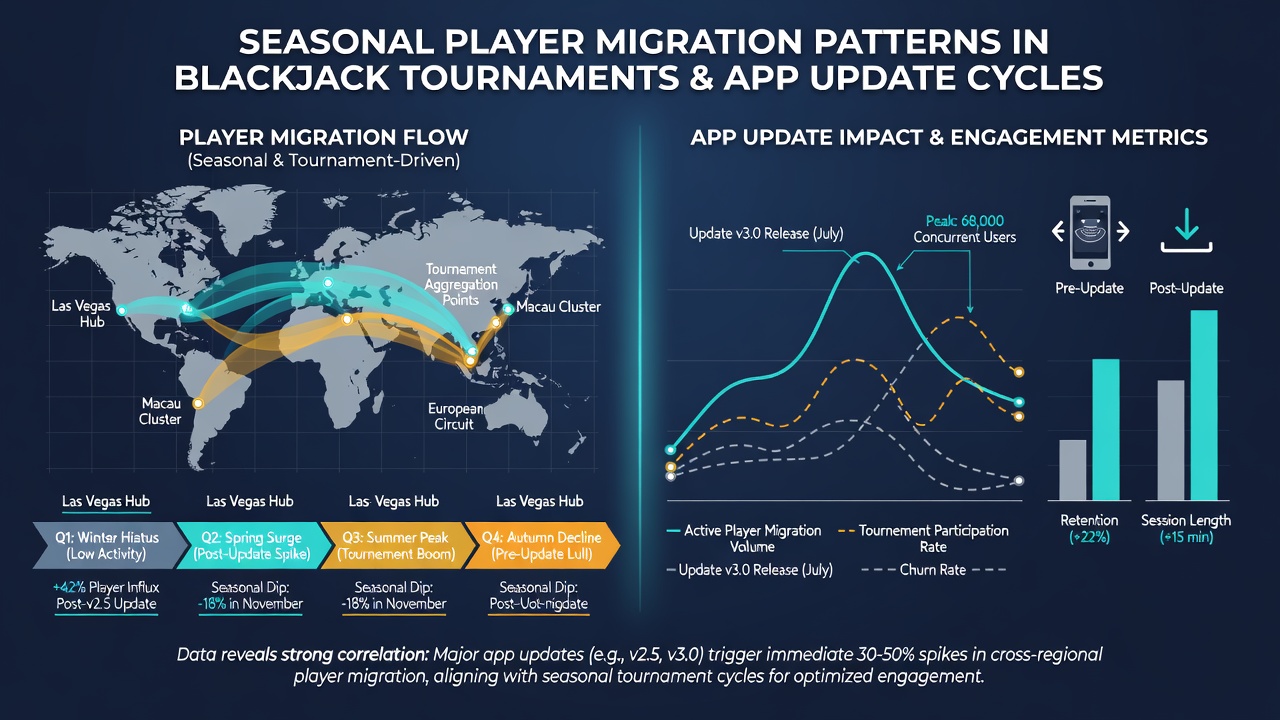
Analysis of participation logs from 2025 and 2026 indicates that the period immediately following major updates accounts for roughly 35 percent of annual tournament entries on leading platforms. This concentration means that prize pools swell during those weeks, drawing additional users who then remain on the updated app until the next cycle begins. Those who study these trends point out that smaller operators without frequent updates experience more consistent but lower traffic, creating a stable environment for players who prefer predictable schedules over constant novelty.
Long-Term Patterns and Industry Response
Over multiple years, the connection between app update cycles and player migration has become a standard consideration for developers and tournament hosts alike. Companies now coordinate release dates with known seasonal trends, releasing feature additions during periods when migration typically peaks to capture new users before they settle elsewhere. Regulatory filings from Canadian provincial gaming commissions show that licensed operators have begun including projected migration impacts in their annual planning documents, reflecting the measurable influence these cycles exert on revenue and participation metrics. As a result, the industry has developed more sophisticated forecasting tools that combine update calendars with historical player movement data to anticipate shifts months in advance.
Conclusion
Seasonal player migration in blackjack tournaments continues to track closely with mobile app update cycles, producing recurring patterns that operators document through analytics and regulatory reports. These movements affect tournament availability, prize structures, and regional participation rates in consistent ways across different markets. As developers refine their release strategies and regulators incorporate migration data into oversight processes, the relationship between updates and player flows remains a central factor in how mobile blackjack tournaments operate throughout the year.