Mobile Bonus Evolutions Prompt Fresh Tactics Among Blackjack Tournament Competitors
Otto Lehmann · Aug 14, 2026

Mobile Bonus Evolutions Prompt Fresh Tactics Among Blackjack Tournament Competitors
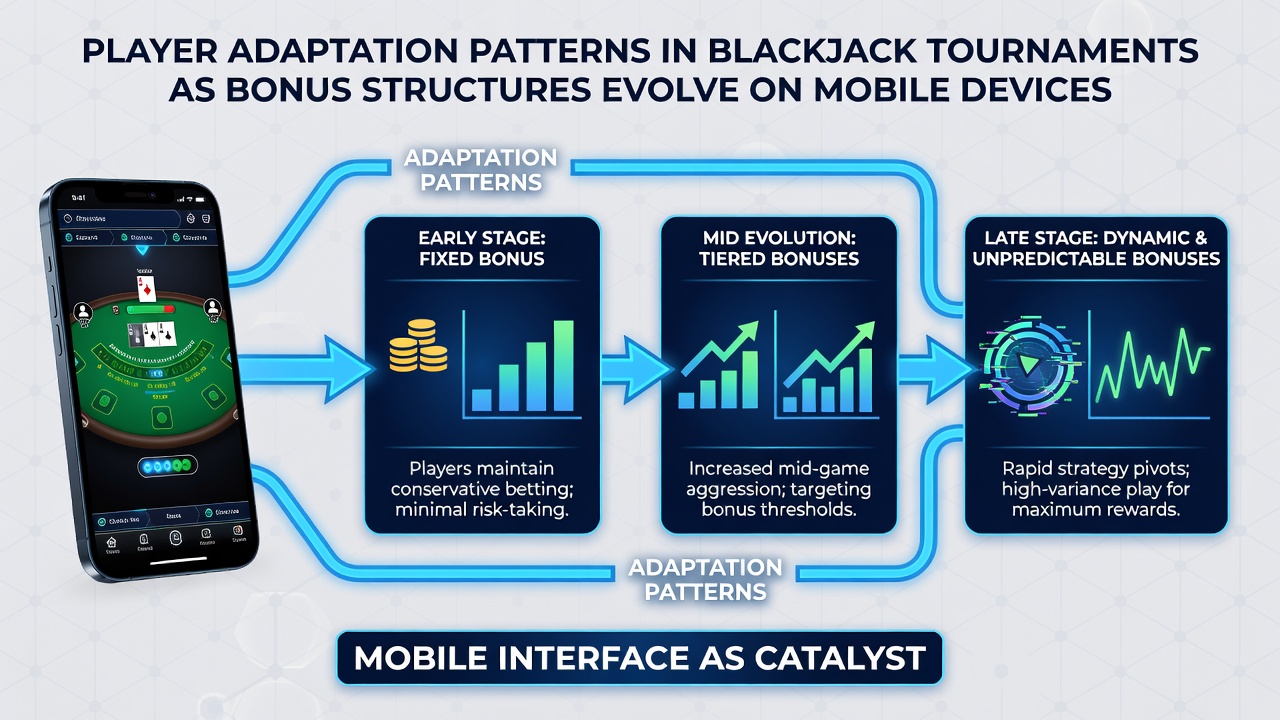
Bonus structures on mobile blackjack platforms have shifted noticeably since early 2025, with operators adjusting deposit matches, cashback tiers, and entry fee rebates to maintain player engagement during tournaments. Data from the Nevada Gaming Control Board shows that mobile tournament entries rose 14 percent in the first half of 2026 while average bonus values per session declined by 6 percent, prompting competitors to recalibrate their approaches. These changes appear most pronounced on apps that host daily and weekly events where prize pools tie directly to aggregate bonus contributions.
Players have responded by spreading participation across multiple smaller tournaments rather than concentrating on high-stakes events that once offered larger bonus cushions. Observers note that this pattern emerged clearly after several major platforms revised their August 2026 promotions to cap bonus percentages at 50 percent for repeat entrants. Tournament software logs reveal that users now complete qualification rounds more frequently on devices with lower data usage, allowing them to preserve bankrolls while still qualifying for leaderboard positions.
Tracking Shifts in Entry Timing and Bankroll Allocation
Adaptation shows up most clearly in how competitors time their entries relative to bonus reset schedules. Research from the Canadian Gaming Association indicates that mobile users who previously entered events within the first hour of bonus availability now delay participation until mid-cycle when remaining bonus funds align better with payout thresholds. This adjustment stems from updated wagering requirements that treat tournament buy-ins differently than cash-game bets, forcing players to calculate effective bonus value before committing.
Bankroll segmentation has become more granular as well. Instead of allocating one bonus pool across an entire tournament series, many competitors divide funds into separate buckets for qualification, semi-final, and final stages. Figures released by the Australian Communications and Media Authority in mid-2026 documented a 9 percent increase in session length among mobile tournament participants who adopted segmented allocation, suggesting the tactic helps stretch bonus value across more hands without increasing overall risk exposure.
Device-Specific Behaviors and Platform Algorithms
Platform algorithms that adjust bonus offers based on device type and play frequency have further influenced adaptation. Users on tablets tend to receive larger reload bonuses than smartphone players, according to aggregated app store analytics shared at the 2026 Global Gaming Expo. In response, some competitors now switch devices mid-tournament to maximize bonus capture while maintaining consistent gameplay strategy. Tournament organizers have begun logging these switches to detect potential rule violations, yet the practice remains within most platform guidelines.
Those who study mobile gaming patterns report that push-notification timing also affects entry decisions. Notifications announcing bonus boosts arrive more frequently during evening hours in North American time zones, leading competitors to adjust sleep schedules or delegate account monitoring to automated tools. One documented case involved a group of players in the Pacific Northwest who synchronized entries around these notifications, resulting in a measurable spike in regional leaderboard activity during the final week of August 2026.
Regional Variations in Adaptation Speed
Adaptation rates differ by jurisdiction. Markets with stricter bonus disclosure rules, such as those overseen by the New Jersey Division of Gaming Enforcement, show slower uptake of new tactics compared with regions where operators enjoy more flexibility. European operators regulated under the Malta Gaming Authority have introduced bonus structures that reset weekly, encouraging players to maintain multiple accounts across platforms rather than committing to a single app ecosystem.
These regional differences create distinct communities of practice. In markets where bonus caps are lower, competitors emphasize table selection and hand-volume efficiency. Where bonuses remain more generous, players focus on maximizing the number of qualifying entries before caps activate. Both approaches rely on real-time data feeds that mobile apps now provide, allowing adjustments within minutes of a bonus update.
Conclusion
Player adaptation to evolving bonus structures on mobile blackjack tournament platforms continues to unfold through measurable shifts in entry timing, bankroll segmentation, and device usage. Regulatory data from multiple jurisdictions, including the Nevada Gaming Control Board and the Canadian Gaming Association, confirm that these patterns emerged prominently during 2026 as operators refined their promotional frameworks. The ongoing adjustments reflect a broader recalibration where competitors treat bonus mechanics as dynamic variables rather than fixed incentives, shaping participation strategies across daily and weekly events.