Licensing Shifts Redefine Side Bet Options in Mobile Tournament Brackets
Theo Albrecht · Jul 12, 2026
Licensing Shifts Redefine Side Bet Options in Mobile Tournament Brackets
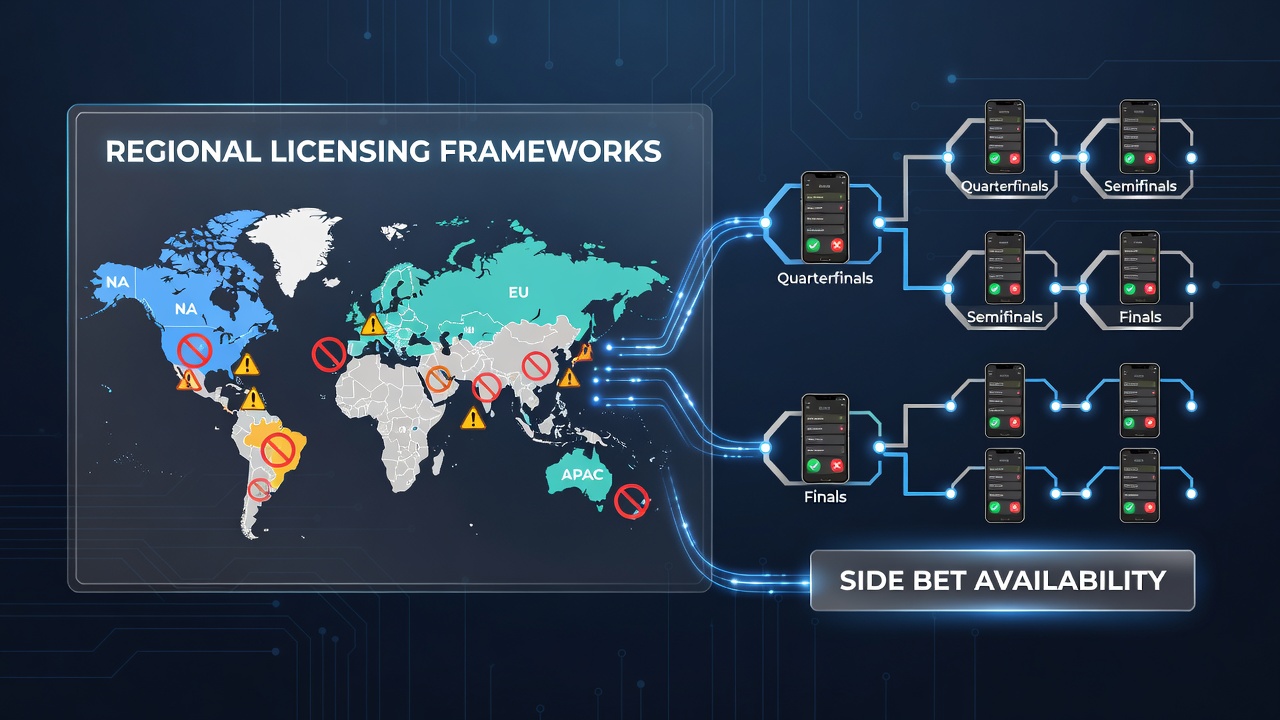
Regional licensing frameworks have begun to reshape which side bets appear inside mobile tournament brackets, and operators now adjust offerings based on jurisdiction-specific approvals that took effect earlier in 2026. These rules determine everything from perfect pairs availability to royal match inclusions, while players encounter varying menus depending on their registered location and the platform's operating license.
Data from state regulators shows that bracket formats in licensed apps must exclude certain side bets when those wagers lack explicit approval under local statutes. One example involves progressive side bets that connect across multiple tables, structures that several frameworks now require to operate only within tightly defined parameters or not at all during tournament play.
Framework Differences Across Key Markets
North American jurisdictions apply distinct criteria that directly influence mobile bracket design. Nevada's control board maintains a list of pre-approved side bets that platforms may include, whereas neighboring states impose additional testing periods before new variants reach tournament brackets. This creates situations where the same app displays different side bet panels for users in adjacent regions.
Canadian provincial systems add another layer, with Ontario's iGaming regulator requiring separate certification for each side bet type used in competitive brackets. Platforms respond by maintaining region-locked menus that activate only when the user's account location matches the licensed territory, a process that became more visible after updates rolled out in spring 2026.
Impact on Tournament Bracket Construction
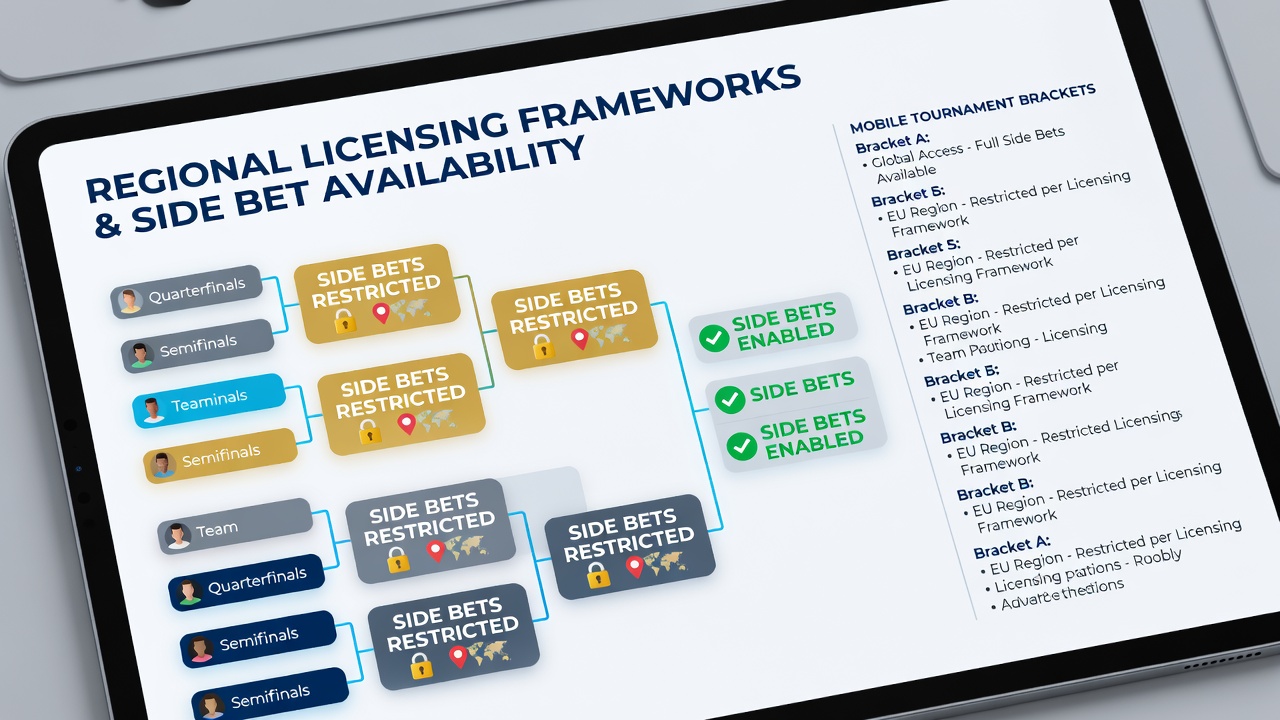
Bracket builders inside mobile platforms now incorporate conditional logic tied to licensing databases. When a player enters a multi-round event, the system checks the governing license first, then populates available side bets accordingly. This means two participants in the same global leaderboard might face different wagering options during identical rounds.
Operators track these variations through centralized compliance tools that update in real time. Figures released by the American Gaming Association indicate that over 60 percent of mobile tournament operators adjusted their side bet libraries between January and June 2026 to align with revised regional requirements.
Technology Behind Regional Restrictions
Geo-fencing combined with license verification modules handles the enforcement. When a device connects, the app queries both the user's IP-derived location and the account's registered jurisdiction against an internal rules engine. Side bets that fail the match stay grayed out or entirely absent from the bracket interface.
Some platforms integrate external databases maintained by regulatory bodies such as the Malta Gaming Authority to cross-check approvals for European users. This integration became standard after several operators faced compliance reviews in late 2025, prompting broader adoption of automated filtering systems by July 2026.
Player Experience Under Varying Rules
Participants notice these differences most clearly when traveling or switching devices. A player who begins a tournament in one state may find certain side bets removed upon crossing into another licensed area, even though the bracket itself continues uninterrupted. Account settings allow users to preview available options before entry, reducing confusion during active competition.
Research from industry analytics firms shows that bracket completion rates remain stable despite these variations, suggesting players adapt quickly to the options presented under their local framework. Developers continue to refine notification systems that alert users to any changes before each round begins.
Future Adjustments Expected
Regulators in additional markets continue to evaluate side bet classifications, with several reviews scheduled for the second half of 2026. Platforms monitor these proceedings through dedicated compliance teams that prepare bracket updates in advance of new rulings. The pattern indicates that side bet availability will remain tied to evolving licensing conditions rather than uniform global standards.
Conclusion
Regional licensing frameworks continue to determine which side bets reach mobile tournament brackets, creating a landscape where availability shifts according to jurisdiction. Operators maintain compliance through automated systems and real-time database checks, while players encounter location-specific menus that reflect current approvals. These structures are likely to persist as more markets finalize their regulatory approaches.