Global Rules Reshaping Blackjack Side Bet Availability Across Casino Markets
Viktor Beck · Jun 3, 2026

Global Rules Reshaping Blackjack Side Bet Availability Across Casino Markets
Regulators in different regions set distinct boundaries on blackjack side bets, and these boundaries determine which options reach casino floors or digital platforms while others remain unavailable. Side bets such as Perfect Pairs, 21+3, and insurance variants face approval processes that examine house edge calculations, game integrity, and consumer protection standards before operators can offer them to players. Data from licensing reviews shows that approvals hinge on mathematical audits rather than marketing preferences, which means certain high-volatility side bets appear only in jurisdictions with more permissive frameworks.
United States State-Level Controls on Side Bet Menus
State gaming commissions in Nevada, New Jersey, and Pennsylvania conduct separate evaluations of blackjack side bets, and each commission requires operators to submit probability tables plus payout structures for review. Nevada Gaming Control Board records indicate that side bets exceeding a 5 percent house edge receive extra scrutiny during annual audits, which leads many Strip properties to limit offerings to lower-edge variants like insurance while restricting others. In contrast, Atlantic City operators must comply with additional consumer disclosure rules that mandate visible RTP information on digital displays, and this requirement has prompted several casinos to drop side bets whose return-to-player figures fall below 94 percent.
European and Asian Licensing Variations
European markets operate under national frameworks that differ sharply from one another, and Malta-based online platforms must satisfy both local and EU-wide standards before listing side bets for international users. Regulators in Spain and Italy demand independent laboratory certification for every new side bet, which delays rollout timelines by several months compared with land-based venues in Asia. Singapore's Casino Regulatory Authority and Australia's state commissions apply similar certification steps yet allow higher-edge side bets when operators demonstrate robust responsible-gaming controls, and these allowances create noticeable differences in menu variety between Singaporean integrated resorts and European online lobbies.
Online Platform Adaptations and Cross-Border Challenges
Digital casinos serving multiple jurisdictions maintain separate game libraries for each regulated market, and software providers configure side bet toggles according to the strictest applicable rule set. This segmentation means a player in one country sees Perfect Pairs available while a user in another region encounters only insurance, and the configuration changes occur automatically based on geolocation checks. Research from gaming analytics firms shows that operators who fail to segment their offerings correctly face license suspension risks, which encourages investment in precise regulatory mapping tools that track rule updates in real time.
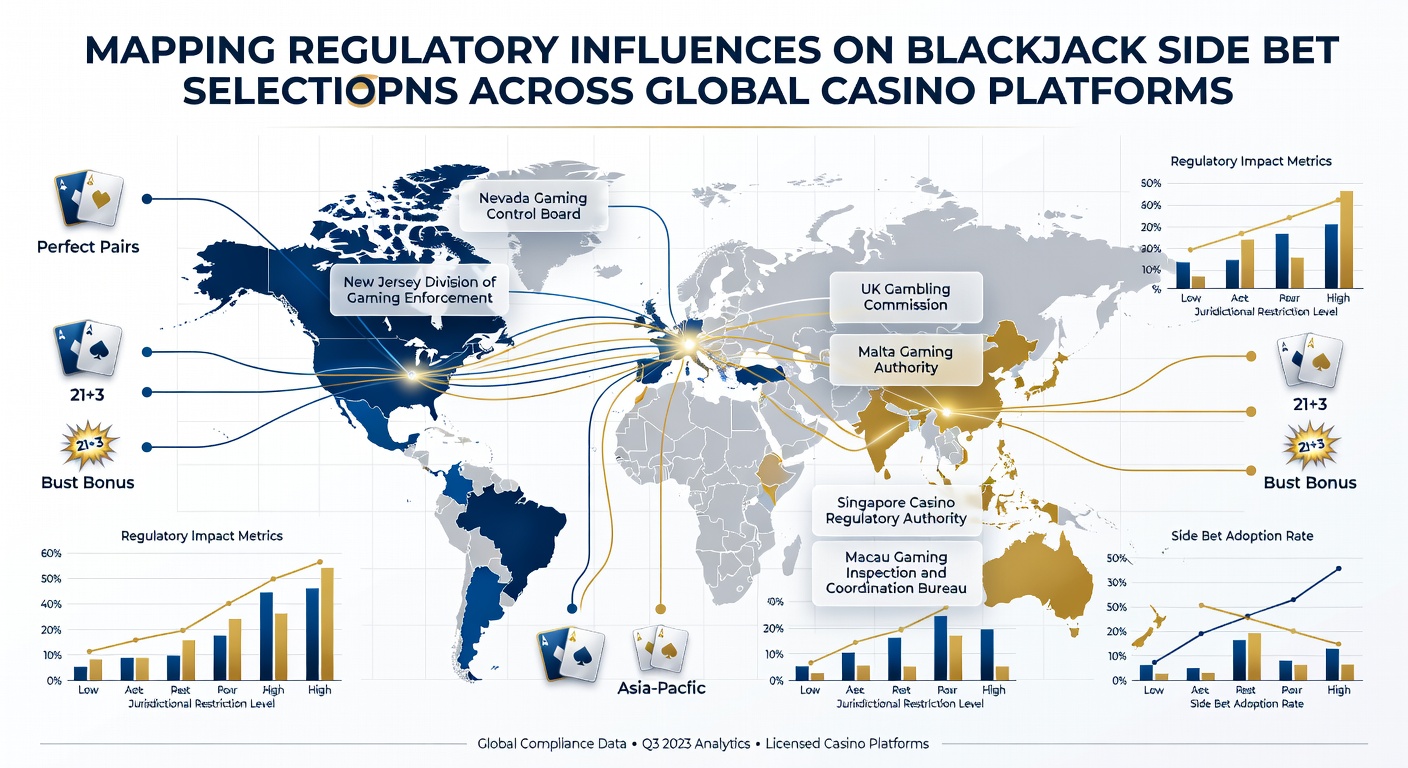
June 2026 updates from several North American and Asian regulators introduced new audit protocols focused on live-dealer side bets, and these protocols require continuous monitoring of shuffle algorithms plus payout accuracy. Operators responded by adjusting side bet selections on live tables to match the revised standards, which reduced the number of available options in some markets while expanding choices in others where certification cleared quickly. Industry reports note that the adjustments occurred without major service interruptions because most platforms already maintained modular game engines capable of activating or deactivating individual side bets through backend switches.
Player Selection Patterns Under Regulatory Constraints
Observational data collected from casino management systems reveals that players gravitate toward side bets that remain consistently available across sessions, and regulatory stability plays a larger role in selection than advertised payout potential. In markets where insurance stays approved without repeated re-certification, usage rates remain higher than in regions requiring quarterly renewals. Those who track player behavior across borders find that regulatory friction reduces experimentation with newer side bets, while stable approval environments encourage broader exploration of the full menu.
Future Mapping Tools and Compliance Infrastructure
Software vendors now supply regulatory intelligence platforms that aggregate rule changes from dozens of jurisdictions into unified dashboards, and casino groups use these tools to forecast which side bets will survive upcoming reviews. The systems cross-reference mathematical models with historical approval outcomes, which helps operators prioritize development resources on variants most likely to receive clearance. As licensing bodies continue to refine their evaluation criteria, these mapping systems become essential for maintaining consistent product offerings across expanding global footprints.
Conclusion
Regulatory mapping of blackjack side bet selections continues to evolve as licensing bodies update their standards and operators refine compliance systems accordingly. The resulting landscape features clear regional differences in available options, with each market reflecting the specific balance its regulators strike between game variety and consumer safeguards. Continued investment in certification processes and monitoring technology supports the steady adaptation of side bet menus to meet these shifting requirements across continents.