Digital Algorithms Reshaping Strategic Decision Processes in Multi-Hand Card Sessions
Viktor Beck · Aug 7, 2026

Digital Algorithms Reshaping Strategic Decision Processes in Multi-Hand Card Sessions
Platform algorithms now influence how decision trees form during multi-hand digital card sessions, where participants manage several hands at once across games such as blackjack and its variants, and these systems adjust information presentation, payout structures, and interface elements based on aggregated player data. Research from academic institutions shows that backend processes track betting patterns and session lengths to modify displayed probabilities or suggested actions, which in turn affects teh branching logic players apply when evaluating multiple simultaneous outcomes. Data collected through 2026 indicates that such modifications occur without direct changes to core random number generators, yet they guide the pathways users construct for optimal play.
Core Mechanics of Decision Trees in Multi-Hand Play
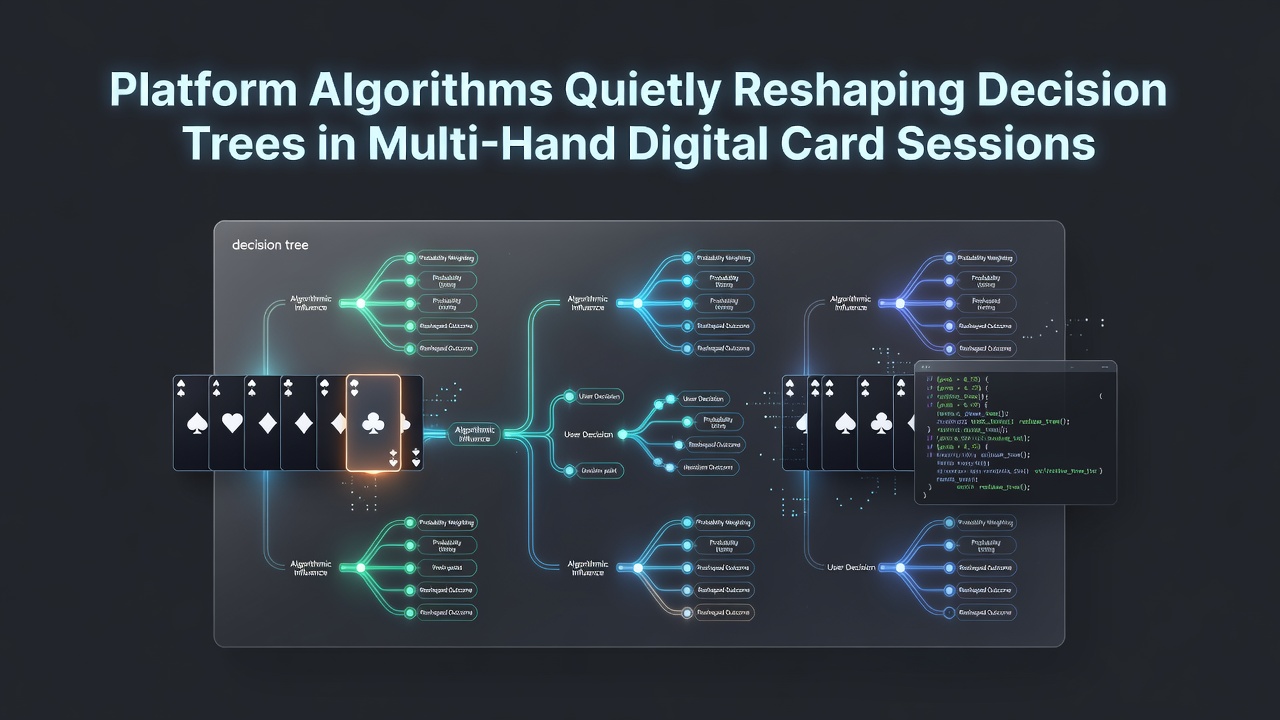
Decision trees in these sessions consist of sequential evaluations that account for card values, dealer upcards, and remaining deck composition while players split attention across concurrent hands, and algorithms on digital platforms can reorder or highlight certain branches through real-time analytics. Observers note that in multi-hand formats the computational load increases because each hand requires independent yet interconnected assessments, whereas platform systems introduce weighting factors derived from historical session metrics. Figures from industry reports reveal that sessions involving four or more simultaneous hands see elevated interaction with algorithmic prompts compared to single-hand equivalents, since the volume of decisions per minute rises sharply.
How Platform Algorithms Introduce Variables
Algorithms deployed by operators analyze user behavior to personalize the visibility of strategic information, such as highlighting specific splitting or doubling opportunities based on prior session performance, and this personalization subtly alters the sequence in which players consider options. According to studies conducted at research centers focused on gaming mathematics, these adjustments often derive from machine learning models trained on millions of hands, which predict likely next actions and then adjust interface elements accordingly. In August 2026 several major platforms reported incremental updates to their recommendation engines that emphasized certain multi-hand combinations over others, reflecting shifts in player retention metrics tracked across North American and European markets. Such changes occur alongside regulatory oversight from bodies including the New Jersey Division of Gaming Enforcement and the Australian Communications and Media Authority, which monitor transparency in information delivery without restricting algorithmic personalization outright.
What's interesting is how these systems maintain compliance while still influencing tree construction, because operators log every displayed prompt and resulting decision for audit purposes. Players managing multiple hands therefore encounter a decision environment that evolves within a single session, as the algorithm recalibrates based on cumulative data points like average bet size and hand completion speed.
Observed Effects on Player Strategies and Session Dynamics
Evidence gathered from platform analytics demonstrates that algorithmic interventions correlate with measurable changes in how frequently certain branches receive selection, particularly in multi-hand scenarios where time pressure amplifies reliance on presented cues. A report issued by the University of Nevada, Las Vegas gaming research division documented variations in splitting frequency when platforms highlighted particular pair combinations during peak hours, and these variations appeared consistently across thousands of tracked sessions. Meanwhile industry associations such as the European Gaming and Betting Association have compiled data showing that algorithmic personalization extends average session duration without altering the underlying house edge calculations.
Take one analysis of tournament-style multi-hand events where participants compete across several simultaneous tables, and algorithms adjust displayed leaderboards or payout ladders in response to collective play patterns, which then feeds back into individual decision trees. Those who've examined the data observe that the effect compounds when users engage across mobile and desktop interfaces, since cross-device tracking allows finer calibration of prompts. Regulatory filings from the Alcohol and Gaming Commission of Ontario further indicate that operators must retain records of algorithmic modifications for a minimum period, enabling external review of how decision pathways shift over time.
Regulatory and Technical Considerations Through Mid-2026
By August 2026 updates to platform protocols had incorporated additional safeguards around algorithmic transparency, driven by requirements from multiple jurisdictions that operators disclose when automated systems influence game presentation. Technical documentation shared among developers describes the use of reinforcement learning loops that refine suggestion accuracy based on post-decision outcomes, yet these loops operate within boundaries set by independent testing laboratories. Data from the Canadian Gaming Association shows steady growth in multi-hand session volume, accompanied by corresponding increases in the complexity of decision trees employed by regular participants. Observers tracking these trends note that the quiet nature of algorithmic influence stems from its integration into routine interface design rather than overt rule changes.
Conclusion
Platform algorithms continue to integrate into the fabric of multi-hand digital card sessions through gradual, data-informed modifications that affect how decision trees develop and execute. Information from regulatory agencies and academic sources confirms that these processes operate alongside existing game mathematics without replacing them, while player behavior adapts to the altered presentation of options. Continued monitoring by oversight bodies across regions ensures that such systems remain within established compliance frameworks as session volumes and technological capabilities expand.