App Layouts Shift Player Strategies in Simultaneous Blackjack Hands
 App interfaces now guide how players approach multi-hand blackjack sessions where several hands run at once on the same screen. Developers arrange cards, bet sliders, and timers in ways that influence split-second choices during live or simulated rounds, and data from platform analytics shows measurable changes in wagering volume and hand selection patterns across user bases. Design elements such as color-coded risk indicators and auto-suggest buttons appear in many mobile titles released or updated through mid-2026. These features reduce the time spent calculating basic strategy for each hand while players manage two or three simultaneous plays. Observers note that interfaces displaying real-time probability overlays lead to more frequent doubling decisions on borderline hands compared with traditional table formats.
Visual Hierarchy and Bet Placement Timing
Screen real estate allocation determines where attention lands first during each round. Larger central panels for primary hands draw quicker bet increases, whereas side panels for secondary hands often receive smaller wagers or skipped plays. Studies of user interaction logs indicate that players adjust stakes on the dominant visual element up to 18 percent more often than on peripheral hands within the same session.
July 2026 platform updates introduced swipe-based hand toggles that allow rapid cycling between active positions. This mechanic shortens decision windows yet maintains compliance with house rules on action sequencing. Those tracking engagement metrics report that swipe users complete multi-hand rounds faster but review strategy charts less frequently than tap-only users.
Timer Mechanics and Cognitive Load
Countdown clocks positioned near each hand create parallel pressure points. When timers sync across hands, players tend to apply the same action to all positions rather than differentiate based on individual card values. Research from academic gaming labs shows this synchronization effect increases correlation between hand outcomes and reduces variance in total session results.
Interface designers mitigate overload through collapsible strategy panels that expand only on demand. Data collected from North American operators reveals that users who keep these panels closed throughout a session place 12 percent more minimum bets on secondary hands. The pattern holds across both casual and frequent player cohorts tracked in the same period.
Color Cues and Risk Perception
Green and red accents applied to bet increase or decrease zones alter perceived safety margins. Warm tones on raise controls correlate with higher average bet sizes per hand, while cooler tones on similar buttons produce more conservative adjustments. Platform A/B tests conducted in early 2026 confirmed these shifts without changing underlying payout structures.
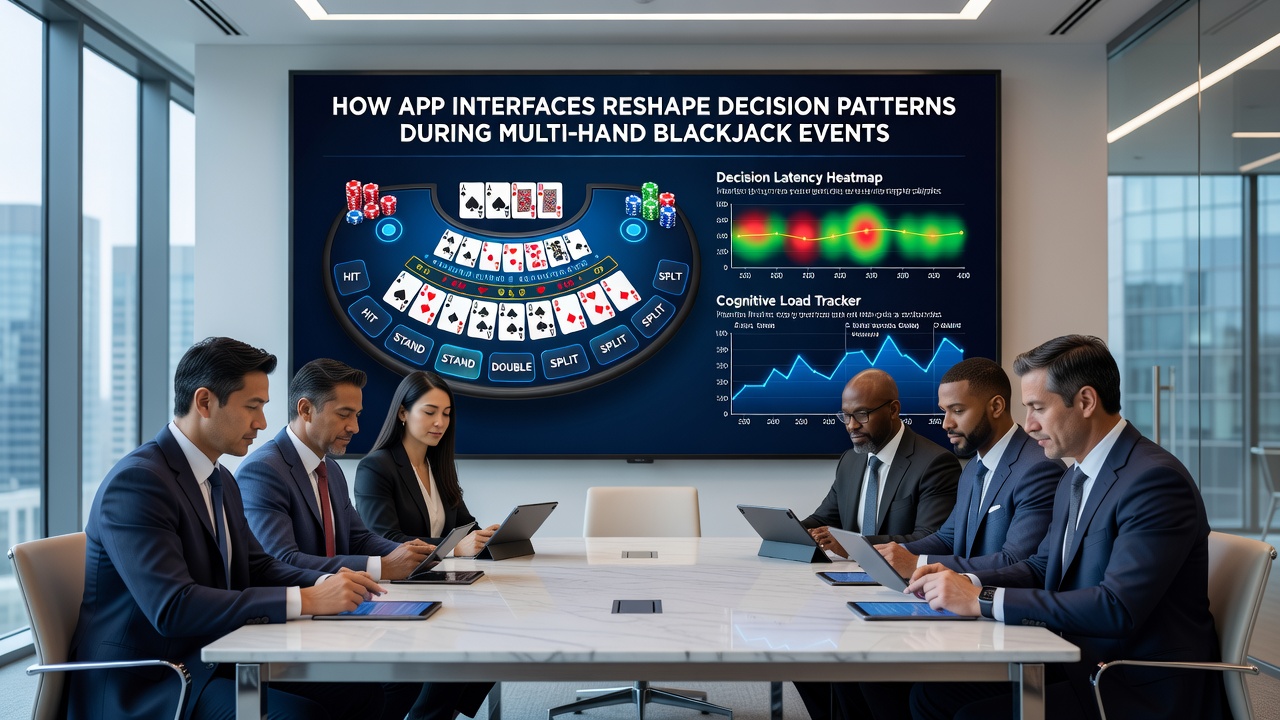
Additional icons that flag insurance opportunities or surrender options appear automatically when conditions meet threshold values. Players respond to these prompts at higher rates than when the same information displays as plain text. Figures released by the Nevada Gaming Control Board document corresponding changes in insurance take-up rates within apps that deploy such visual flags.
Cross-Device Consistency and Learned Patterns
Users who switch between tablet and phone versions of the same title carry over layout expectations. When phone interfaces compress multi-hand views into stacked rows, decisions on lower hands slow compared with tablet layouts that keep all hands visible. Longitudinal tracking by industry analysts shows adaptation occurs within three sessions on average, after which betting distributions stabilize.
External regulatory reviews in jurisdictions such as Pennsylvania and Ontario require clear separation of hand controls to prevent accidental actions. These rules shape how developers cluster buttons and reduce overlap errors that previously skewed outcome data in multi-hand formats.
Conclusion
Interface choices in multi-hand blackjack applications continue to evolve alongside hardware improvements and regulatory expectations. Layout decisions, timer placement, and visual signaling collectively steer how participants distribute attention and capital across concurrent hands. Ongoing measurement by operators and oversight bodies supplies fresh datasets that map these influences without altering core game mathematics. As July 2026 updates roll out across additional markets, further refinements to decision support tools will likely extend the same patterns observed in current deployments.